

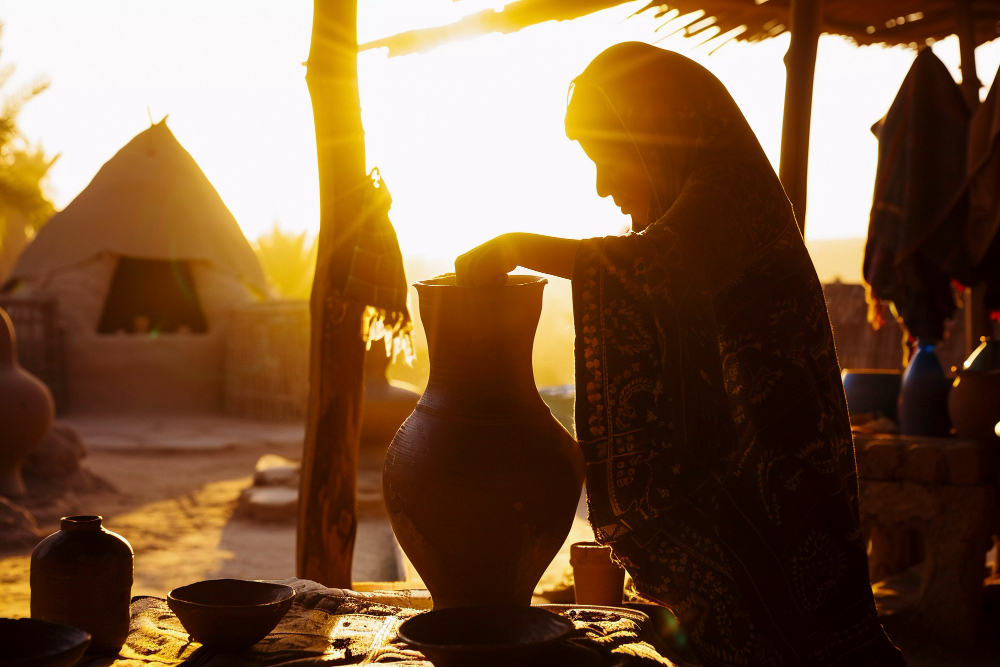
Long before southern Tunisia became known for its dunes, it was and still is Berber country. Scattered across the Dahar mountain range, hilltop villages such as Toujane, Chenini, and Douiret have preserved a way of life that predates the arrival of Arab, Ottoman, and French rule by centuries. For travellers researching a berber village tour Tunisia, understanding what these communities are really like beyond the postcard image is the first step to choosing the right way to visit.
Who Are the Berbers of the Dahar ?
The Berbers, or Amazigh people, are the indigenous inhabitants of North Africa, present in Tunisia long before the region’s Arabisation. In the south, their presence is concentrated in the Dahar mountains around Tataouine and Medenine, and in the troglodyte plateau of Matmata. Here, entire villages are still built around the same principles that shaped them centuries ago: defensible hilltop positions, terraced agriculture, and homes carved directly into rock or stacked in dry-stone tiers along a ridge.
What sets these communities apart from a staged cultural stop is that many families still live exactly this way. Weaving, olive pressing, and dry-farming are not demonstrations for visitors, they are simply how the household runs.
A Morning in Toujane : Weaving, Olive Groves, and Mountain Tea
Toujane, one of the best-preserved Berber villages in the Dahar, is a good example of what a visit actually looks like. Mornings there often unfold inside a family home rather than at a monument: the women of the household working at a traditional loom, a breakfast of local bread, honey, and olive oil laid out on the table, and a pot of mountain-herb tea brewed over charcoal.
Outside, narrow stone paths wind between houses stacked against the hillside, framed by fig, almond, and olive trees fed by an ancestral network of terraced dams that channel every drop of rainwater. It is this combination genuine domestic life set against a dramatic mountain backdrop that makes a Berber village day trip feel more like an invitation than a tour stop.
Troglodyte Homes and the Ksour : Architecture Built for the Desert
Further south and west, the architecture changes again. In Matmata, entire homes are dug into the ground around a central courtyard, keeping interiors cool through the worst of the summer heat. Around Tataouine and Chenini, communities built ksour fortified granaries of stacked stone chambers called ghorfas, originally used to store grain and olive oil safely away from raiders. Some, like Ksar Hallouf, still centre on a historic mosque and an old olive press; others, like Douiret, offer overnight stays inside restored troglodyte rooms, for travellers who want to sleep inside the same walls their hosts’ ancestors built.
From the Dahar to the Dunes : Where Berber Villages Meet the Tunisian Sahara
Berber villages and the Tunisian Sahara are not two separate destinations, they are one continuous landscape. Heading south from the Dahar, the same ridges and canyons gradually give way to Douz, Zaafrane, and the hot-spring oasis of Ksar Ghilane, where the mountains finally surrender to the dunes of the Grand Erg Oriental. Many travellers combine both in a single itinerary: a morning among Berber weavers and olive groves, an afternoon oasis swim, and a night camped deep in the Tunisian Sahara under a genuinely dark sky.
If the desert side of the trip is what interests you most, our complete guide to Sahara desert tours in Tunisia breaks down routes, seasons, and camp options in detail.
How to Visit : Day Trip, Multi-Day Circuit, or Small-Group Desert Tour
There is no single right way to experience Berber village life, it depends on how much time you have:
- If you have one day, our day trip from Djerba into Berber life reaches Toujane and Matmata and returns you to your hotel by evening.
- If you want the fuller picture, Berber villages, the ksour, the salt flats, and the deep dunes in one trip, our week-long circuit through Berber villages and oases is built for exactly that.
- Most of our programs run as private departures with your own guide and driver, but a Tunisia desert tour small group is also available on our one-day and two-day formats, for solo travellers or couples who prefer to share the trip and the cost.
Best Time of Year to Visit
Spring (March–May) and autumn (September–November) offer the most comfortable conditions for exploring hilltop villages on foot, with mild days and cool evenings. Summer is workable with an early start and a long midday break, while winter brings colder nights but exceptionally clear light, ideal if the trip continues into the desert. Our 2-day Sahara expedition from Djerba is a popular way to pair a Berber village morning with a night among the dunes.
Planning Your Berber Village Experience
Whether you are drawn to the weaving looms of Toujane, the troglodyte chambers of Matmata, or the ksour of Chenini, the best starting point is deciding how much time you have and how deep into the Tunisian Sahara you want to go afterwards. Our team can tailor any of these routes from a single day to a full week around your pace and interests.